
Life has become increasingly disconnected from the natural world.
We wake up indoors, put on shoes, get into our cars, spend hours surrounded by screens and artificial lighting, walk across concrete and flooring, and often finish our days without ever having directly touched the earth beneath us.
Yet sometimes, the simplest moments outside can feel remarkably different.
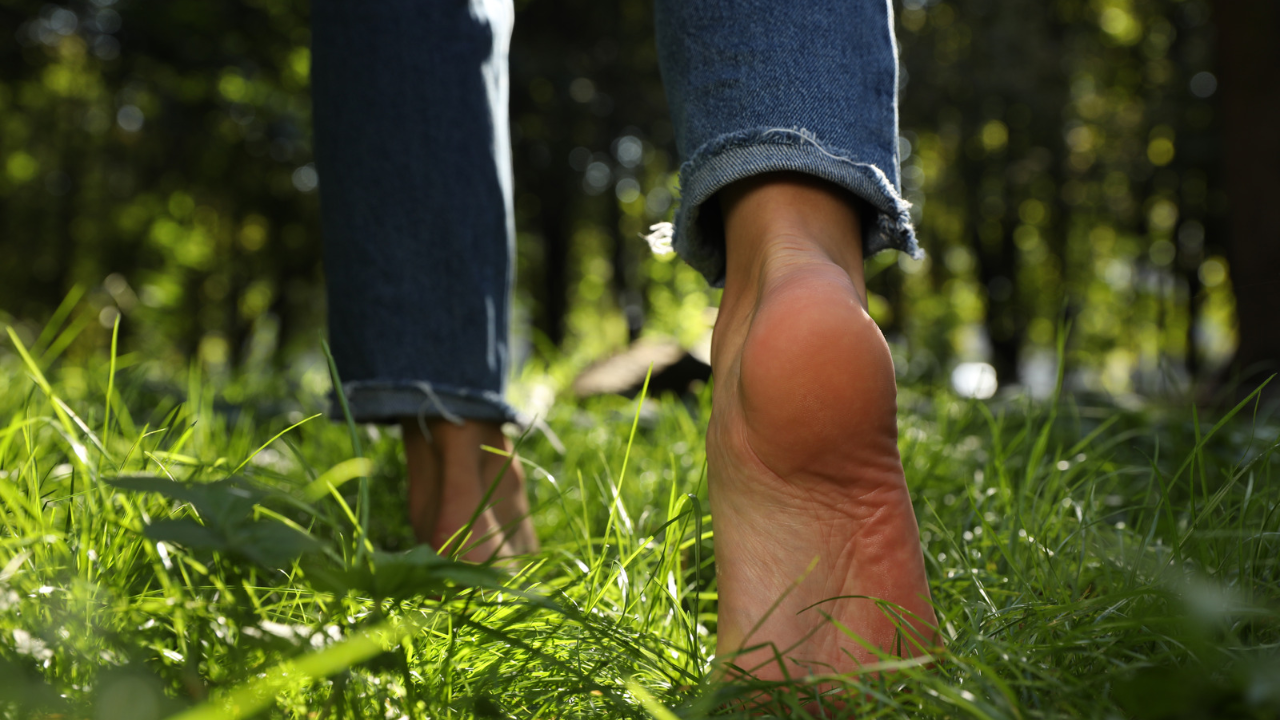
Standing barefoot in the grass.
Sitting quietly beneath a tree.
Walking along the shoreline.
Feeling sand beneath your feet.
Listening to leaves moving in the breeze.
These moments don’t require equipment, a complicated routine, or another item on our to-do list. They simply invite us to pause and reconnect with the physical world around us.
This simple concept is at the heart of earthing and grounding.
What Is Earthing?
Earthing, often called grounding, generally refers to making direct physical contact with the Earth’s natural surface.
The most familiar example is simply walking barefoot outdoors on grass, soil, or sand.
There are also products marketed specifically for grounding, but one of the reasons the concept appeals to so many people is that the basic practice doesn’t have to be complicated.
Take off your shoes.
Step outside.
Feel what is beneath you.
And stay there long enough to actually notice it.
There is an important distinction worth making, however. Grounding is also a word commonly used in mindfulness and wellness practices to describe techniques that help bring our attention away from racing thoughts and back to our immediate physical surroundings.
The two ideas aren’t exactly the same, but they complement each other beautifully.
Earthing brings your body into contact with the natural environment.
Mindful grounding brings your attention into the present environment.
Put the two together, and an ordinary moment outside can become an intentional pause from the constant stimulation of everyday life.
Why Have We Become So Disconnected From the Earth?

Think about how much of the average day takes place without direct contact with nature.
We move from houses to vehicles, offices, stores, gyms, restaurants, and back home again. Even when we are outdoors, our shoes create a physical barrier between our feet and the ground.
Technology has also transformed where our attention goes.
We can sit in a beautiful park while mentally being somewhere entirely different because we are scrolling through our phones, answering messages, reading the news, planning tomorrow, or thinking about what needs to happen next.
Our bodies may be outside while our attention remains somewhere else.
Grounding offers an opportunity to reverse that for a few moments.
Instead of asking:
What do I need to do next?
We can simply notice:
Where am I right now?
The sensation of grass beneath your feet.
The warmth of sunlight against your skin.
The sound of birds nearby.
The movement of air.
The scent of the earth after rain.
The texture of sand or soil.
None of these things are demanding your attention.
They are simply there, waiting to be noticed.
The Beauty of Simply Stepping Outside
One of the things I love about grounding is its simplicity.
Modern wellness can sometimes become surprisingly complicated.
We are surrounded by products, routines, programs, challenges, tracking devices and advice telling us there is always something else we should be doing.
Grounding can be much quieter than that.
It can simply mean stepping into your backyard barefoot with your morning tea.
It might mean sitting beside a garden for ten minutes.
It could mean taking your shoes off at the beach and allowing yourself to notice the sand instead of immediately pulling out your phone.
The point isn’t to achieve a particular state of mind.
You don’t have to force yourself to relax.
You don’t have to stop thinking.
You don’t have to have a profound spiritual experience.
You simply allow yourself to be where you already are.
There is something beautifully uncomplicated about that.
Grounding Through the Senses
One way to deepen a grounding practice is to intentionally involve your senses.
Rather than simply going outside while your thoughts continue racing somewhere else, begin noticing the physical environment around you.
What can you feel?
Notice the ground beneath your feet.
Is it warm or cool?
Soft or firm?
Dry or damp?
If you’re sitting outside, notice the feeling of the chair, grass, sand, or earth supporting you.
Don’t judge the sensation or try to change anything.
Just notice it.
What can you hear?
Listen beyond the loudest sounds.
Perhaps you hear birds.
Traffic in the distance.
Wind moving through leaves.
Someone walking nearby.
Rain.
A lawnmower.
Silence doesn’t need to be perfect for a moment to be grounding.
The idea is simply to become aware of the environment you’re actually standing in.
What can you see?
Look around slowly.
Notice colours.
Clouds.
Trees.
Light.
Shadows.
Movement.
Instead of immediately labeling everything you see, allow yourself to simply observe it.
What can you smell?
Freshly cut grass.
Rain.
Flowers.
Trees.
Warm soil.
Cool autumn air.
The natural environment is filled with subtle sensory information that we often overlook because our attention is somewhere else.
Grounding gives us permission to notice again.
Try a Five-Minute Barefoot Pause
Grounding doesn’t have to become another lengthy wellness ritual.
Try giving yourself just five minutes.
Find a safe outdoor space where you’re comfortable removing your shoes.
Stand naturally and allow your feet to settle against the ground.
You don’t need a special breathing pattern.
Just breathe normally.
Then bring your attention downward.
Notice your feet.
Notice the surface beneath them.
Notice the temperature.
Notice where your weight naturally falls.
Then expand your awareness outward.
What do you hear?
What does the air feel like?
What is moving around you?
If your mind wanders, that’s okay.
There is nothing to correct.
Simply bring your awareness back to your surroundings.
Feel your feet. Notice the earth. Take another breath.
And continue with your day when you’re ready.
Grounding Can Be Part of Everyday Life

A grounding practice doesn’t need to exist separately from the rest of your day.
In fact, it may feel more natural when it becomes part of things you already do.
Morning Grounding
Before reaching immediately for your phone, step outside for a few minutes.
Bring your coffee or tea.
Let your feet touch the grass if the environment is safe and comfortable.
Notice the temperature and light.
There is no need to turn it into anything more than that.
Simply allow the outside world to be the first thing that receives your attention instead of a screen.
Garden Grounding
Gardening naturally brings us into closer contact with soil, plants and the changing seasons.
Instead of rushing through the task, occasionally pause.
Feel the soil.
Notice its texture.
Look closely at the plants.
Listen to the sounds around you.
There can be genuine pleasure in simply working with your hands in the earth.
Walking Barefoot
If you have access to a safe patch of grass or sand, try walking slowly without shoes.
Instead of treating the walk as exercise or focusing on distance, notice how your feet naturally respond to the surface beneath them.
Slow down enough to actually experience the ground.
Evening Grounding
The end of the day can be another beautiful time to step outside.
Leave your phone inside for a few minutes.
Notice how the temperature has changed.
Look at the sky.
Listen to the quieter sounds of the evening.
It’s a simple way of marking the transition between the activity of the day and the slower hours that follow.
Grounding Doesn’t Require Bare Feet
If walking barefoot isn’t safe, comfortable, or practical for you, that doesn’t mean you can’t experience a grounding moment outdoors.
Sit beneath a tree.
Rest your hands on the grass.
Work in the garden.
Sit near water.
Walk through a park.
Listen to the sounds of nature.
Watch the clouds move.
Notice the sensation of fresh air against your skin.
Grounding can also mean becoming deliberately aware of your physical surroundings.
The intention isn’t to follow an exact formula.
It’s to come back into the experience of where you are.
Earthing and Wellness Claims
There has been growing interest in earthing within complementary wellness circles, including discussion about possible relationships with sleep, stress, inflammation and other aspects of health.
It’s important, however, to approach these claims thoughtfully.
Earthing shouldn’t be presented as a cure or replacement for medical treatment, and compelling personal experiences aren’t the same thing as strong scientific evidence.
That’s also why I think grounding can be appreciated without needing extraordinary promises attached to it.
You don’t have to believe that standing barefoot outside will cure something in order to recognize the value of spending intentional time outdoors, noticing your surroundings and taking a break from constant stimulation.
Sometimes something can be worthwhile simply because it creates a peaceful moment.
Grounding as a Break From Technology
There is another aspect of grounding that may be particularly meaningful today.
It gives us somewhere else to put our attention.
Our phones are rarely far away.
There is always another notification.
Another message.
Another video.
Another headline.
Another thing competing for our attention.
Even our quiet moments can quickly become scrolling moments.
Try occasionally making your grounding time completely screen-free.
Leave your phone inside if it’s safe to do so.
Don’t photograph the sunset.
Don’t record the birds.
Don’t check the weather while you’re standing in it.
Just experience it.
Not everything meaningful needs to become content.
Some moments can simply belong to the moment itself.
Grounding Through the Seasons

One beautiful thing about spending intentional time outdoors is becoming more aware of how nature changes throughout the year.
Grounding doesn’t have to belong only to warm summer days.
Spring brings damp earth, emerging plants and warmer light.
Summer offers warm grass, gardens, sand and long evenings.
Autumn brings crisp air, changing leaves and completely different sounds and textures beneath our feet.
And while barefoot grounding may not be practical during a Canadian winter, simply stepping outside, breathing the cold air and observing the landscape can still become a powerful sensory pause.
Nature is never completely static.
When we spend time noticing it, we begin noticing those small transitions again.
Create Your Own Grounding Space
You don’t need acres of land or somewhere remote.
A balcony, backyard, garden, patio, nearby park or quiet outdoor corner can become your grounding space.
You might add a comfortable chair.
Grow a few herbs or flowers.
Bring your morning tea outside.
Listen to a calming soundscape.
Sit quietly after a sound bath or meditation.
And sometimes, do absolutely nothing.
The space doesn’t have to look perfect.
It simply needs to be somewhere you can comfortably pause and connect with your surroundings.
Over time, returning to the same place can become its own gentle ritual.
A Simple Grounding Practice to Try Today
If you’ve never intentionally practiced grounding, start simply.
Step outside.
If it is safe and comfortable, remove your shoes.
Stand on the grass, earth, or sand.
Let your arms rest naturally.
Take a slow breath.
Instead of immediately trying to make yourself relax, notice your surroundings.
Feel what is beneath your feet.
Notice the air.
Listen.
Look around.
Allow your attention to settle into what is actually happening around you rather than what happened yesterday or what needs to happen tomorrow.
Stay for a few minutes or for however long feels comfortable.
When you’re ready, continue with your day.
That’s it.
It doesn’t have to become anything more complicated.
Coming Back to What Is Already Here
Perhaps the greatest beauty of grounding is that nature doesn’t ask anything from us.
The grass doesn’t care how productive we’ve been.
The trees aren’t interested in our schedules.
The sky doesn’t require us to answer an email.
For a few quiet moments, we can simply step away from everything competing for our attention and notice something incredibly basic:
We are here.
Feet on the ground.
Air moving around us.
Life continuing quietly beyond our screens, responsibilities and routines.
Grounding doesn’t have to be another wellness goal to achieve.
Maybe it can simply be a reminder to pause.
To step outside.
To notice.
To breathe.
And every now and then, to take off our shoes and remember what the earth beneath our feet actually feels like.
Sometimes grounding isn’t about finding somewhere new to go. It’s about becoming present enough to feel where you already are.
Gentle Wellness Note
Earthing and grounding practices are intended to complement, not replace, appropriate medical care. If you have a health condition that affects your balance, mobility, circulation or sensation in your feet, consider your individual safety and speak with an appropriate healthcare professional before trying barefoot outdoor practices.
Leave a Reply